
Postpartum Pain
Your body has changed. Recovery takes care. Personalized physiotherapy at home to help you recover from postpartum pain, rebuild strength and return to everyday movement with confidence after childbirth.
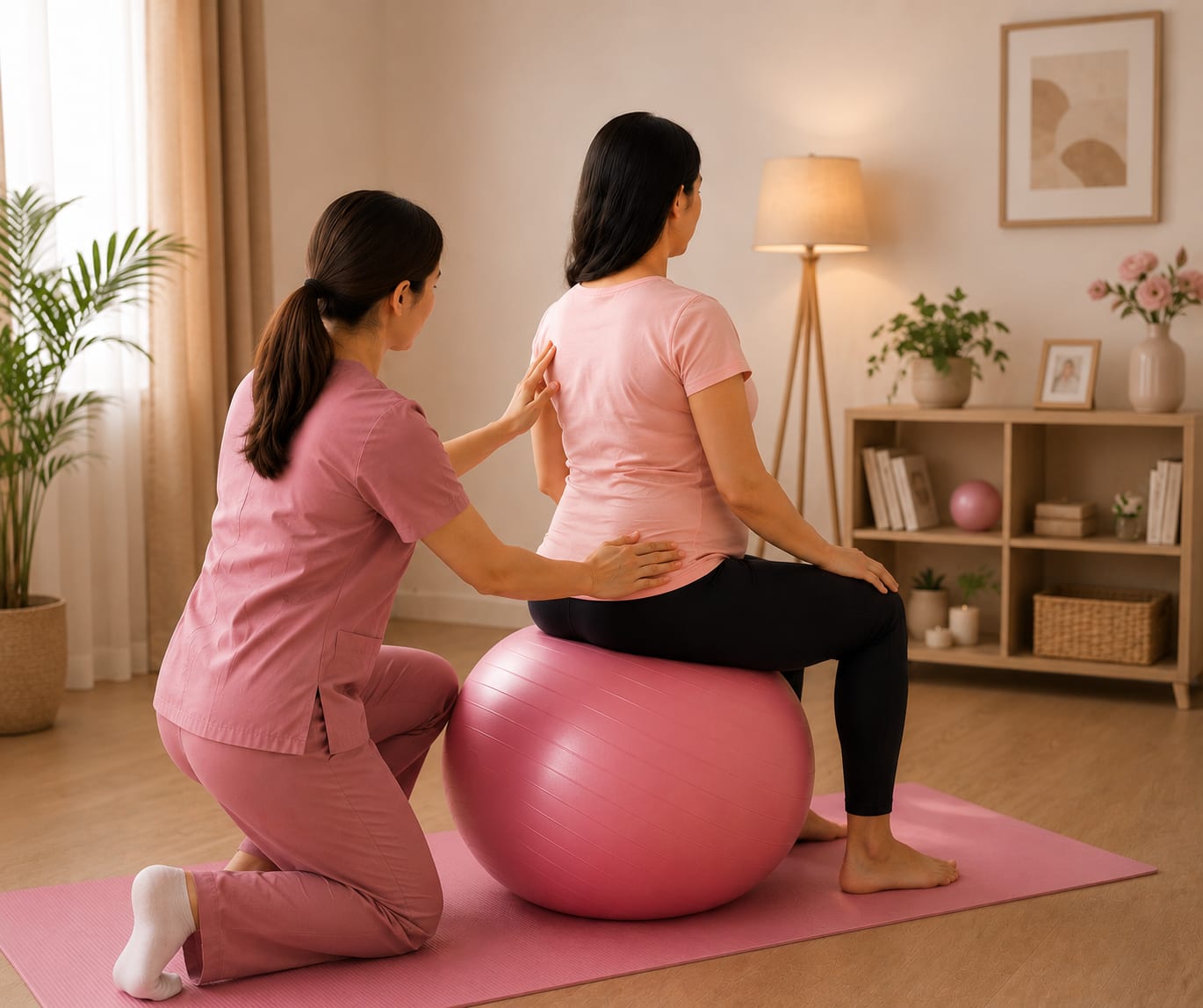
Pain and changes you may notice
Recovery after childbirth is different for everyone. Some symptoms settle naturally, while persistent pain or weakness may benefit from assessment and individualized physiotherapy.
A gradual approach to postpartum recovery
Pain & Movement Assessment
We assess how pain, weakness or movement limitations are affecting daily activities such as walking, sitting, lifting and caring for your baby.
Core & Pelvic Floor Rehabilitation
Individualized exercises can help restore abdominal and pelvic floor function, improve coordination and gradually rebuild strength according to your symptoms and recovery stage.
Gradual Return to Activity
Your programme can progress from basic daily movement towards strengthening and exercise as your body recovers and your symptoms allow.
What to expect in your postpartum session
Booking
Share your delivery history, symptoms and preferred time via call or WhatsApp.
Assessment
We discuss your pain, movement, strength and any pelvic-health concerns affecting daily life.
Personalized Plan
Your rehabilitation plan is adjusted to your delivery, symptoms, recovery stage and functional goals.
Progression
Exercises and activity are progressed gradually as your strength, comfort and confidence improve.
Recovery should fit around your new routine
Your physiotherapist can help you learn comfortable lifting and carrying strategies and gradually rebuild the strength needed for caring for your baby.
Comfortable positioning and appropriate support can help reduce unnecessary strain on the neck, shoulders and back during feeding.
Regular gentle movement and changing positions can help you gradually return to normal daily activities without unnecessarily overloading painful areas.
Exercise should be reintroduced progressively. Your physiotherapist can help determine appropriate starting points and progression based on your recovery and symptoms.
Postpartum recovery takes time. Persistent or worsening pain, pelvic floor symptoms, wound concerns or difficulty returning to normal activities should be discussed with your doctor, midwife or an appropriately trained physiotherapist.
When postpartum pain needs medical attention
Some symptoms after childbirth require medical assessment rather than routine physiotherapy. Seek prompt medical advice if you notice:
Postpartum pain, answered.
Is postpartum pain normal? +
When can I start physiotherapy after childbirth? +
Can physiotherapy help after a C-section? +
Can physiotherapy help with bladder leakage after childbirth? +
What if I still have pelvic or back pain after delivery? +
Can I return to exercise after childbirth? +
Standard home physiotherapy session — includes assessment and personalized care.
Give your body time, support and the right recovery plan.
Book a home assessment for postpartum pain and begin a personalized physiotherapy recovery plan.
Postpartum Pain
Your body has changed. Recovery takes care. Personalized physiotherapy at home to help you recover from postpartum pain, rebuild strength and return to everyday movement with confidence after childbirth.
Pain and changes you may notice
Recovery after childbirth is different for everyone. Some symptoms settle naturally, while persistent pain or weakness may benefit from assessment and individualized physiotherapy.
A gradual approach to postpartum recovery
Pain & Movement Assessment
We assess how pain, weakness or movement limitations are affecting daily activities such as walking, sitting, lifting and caring for your baby.
Core & Pelvic Floor Rehabilitation
Individualized exercises can help restore abdominal and pelvic floor function, improve coordination and gradually rebuild strength according to your symptoms and recovery stage.
Gradual Return to Activity
Your programme can progress from basic daily movement towards strengthening and exercise as your body recovers and your symptoms allow.
What to expect in your postpartum session
Booking
Share your delivery history, symptoms and preferred time via call or WhatsApp.
Assessment
We discuss your pain, movement, strength and any pelvic-health concerns affecting daily life.
Personalized Plan
Your rehabilitation plan is adjusted to your delivery, symptoms, recovery stage and functional goals.
Progression
Exercises and activity are progressed gradually as your strength, comfort and confidence improve.
Recovery should fit around your new routine
Your physiotherapist can help you learn comfortable lifting and carrying strategies and gradually rebuild the strength needed for caring for your baby.
Comfortable positioning and appropriate support can help reduce unnecessary strain on the neck, shoulders and back during feeding.
Regular gentle movement and changing positions can help you gradually return to normal daily activities without unnecessarily overloading painful areas.
Exercise should be reintroduced progressively. Your physiotherapist can help determine appropriate starting points and progression based on your recovery and symptoms.
Postpartum recovery takes time. Persistent or worsening pain, pelvic floor symptoms, wound concerns or difficulty returning to normal activities should be discussed with your doctor, midwife or an appropriately trained physiotherapist.
When postpartum pain needs medical attention
Some symptoms after childbirth require medical assessment rather than routine physiotherapy. Seek prompt medical advice if you notice:
Postpartum pain, answered.
Is postpartum pain normal? +
When can I start physiotherapy after childbirth? +
Can physiotherapy help after a C-section? +
Can physiotherapy help with bladder leakage after childbirth? +
What if I still have pelvic or back pain after delivery? +
Can I return to exercise after childbirth? +
Standard home physiotherapy session — includes assessment and personalized care.
Give your body time, support and the right recovery plan.
Book a home assessment for postpartum pain and begin a personalized physiotherapy recovery plan.