
Pelvic Girdle Pain
Personalized physiotherapy at home for pelvic girdle pain, helping you move with greater comfort and confidence during pregnancy and after childbirth.
Signs of pelvic girdle pain
Pelvic girdle pain can make ordinary movements uncomfortable. Symptoms may change with activity, posture and the stage of pregnancy or postpartum recovery.
Rehabilitation designed around how you move
Movement & Symptom Assessment
We assess your pain pattern, functional limitations and relevant movement strategies to understand which activities are aggravating your symptoms.
Individualized Exercise
Exercises are selected according to your symptoms, stage of pregnancy or postpartum recovery, strength and functional goals.
Activity Modification
You can learn practical ways to modify painful movements, including bed mobility, transfers, stairs, walking and everyday household activities.
Support for Daily Function
Treatment focuses on helping you remain as active as comfortably possible while gradually rebuilding movement confidence and physical capacity.
What to expect during your pelvic girdle pain assessment
History
We discuss your pregnancy or postpartum stage, pain, activity limitations and rehabilitation goals.
Functional Assessment
Relevant movements such as walking, transfers and position changes are assessed according to your symptoms.
Treatment Plan
Your programme is built around symptom management, movement confidence and your individual functional needs.
Progression
Exercises and activities are progressed as your symptoms, strength and functional tolerance improve.
Small movement changes can make daily activities easier
You can learn comfortable movement strategies for rolling and changing positions in bed while avoiding unnecessary aggravation of symptoms.
Walking tolerance can be gradually managed according to your symptoms, with activity adjusted rather than complete inactivity becoming the goal.
Your physiotherapist can help you identify comfortable strategies for stair climbing and other weight-bearing activities.
Transfers, getting into a car, dressing and household activities can be adapted according to your symptoms and current physical capacity.
Pelvic girdle pain is real and can significantly affect movement, but complete bed rest is not usually the goal. A carefully planned approach can help you stay appropriately active while managing painful activities and rebuilding function.
When pelvic pain needs medical assessment
Pregnancy-related pelvic pain should be assessed appropriately. Seek urgent medical advice if pain is severe, rapidly worsening or accompanied by other concerning symptoms.
Pelvic girdle pain, answered.
What is pelvic girdle pain? +
Is pelvic girdle pain common during pregnancy? +
Can physiotherapy help with pelvic girdle pain? +
Should I stop exercising if I have pelvic girdle pain? +
Can pelvic girdle pain continue after childbirth? +
Can I get pelvic girdle pain physiotherapy at home? +
How long does pelvic girdle pain take to improve? +
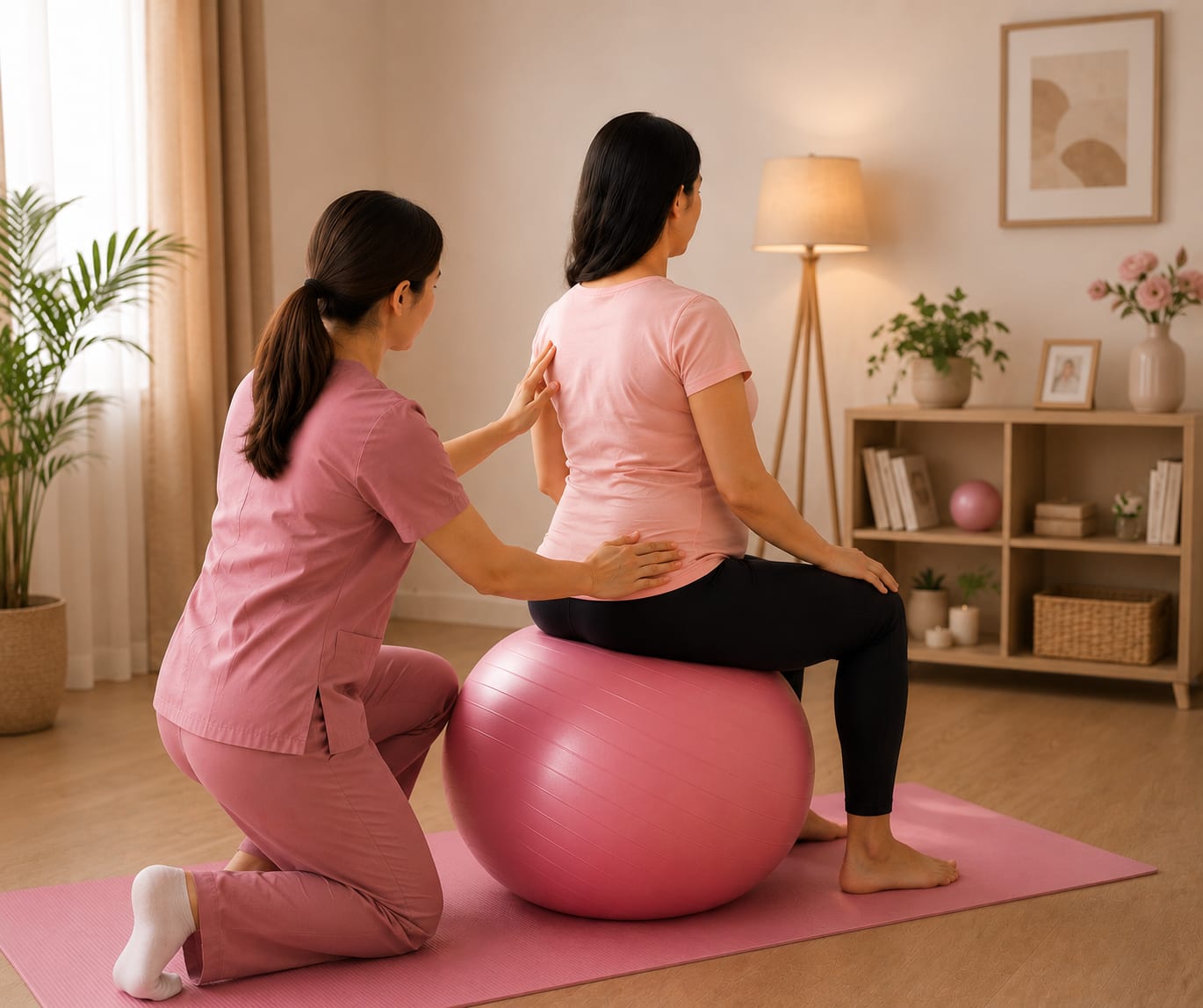
Home physiotherapy session — includes assessment and personalized care.
Move with more confidence.
Book a home assessment for pelvic girdle pain and begin a personalized physiotherapy programme designed around your symptoms and daily life.
Pelvic Girdle Pain
Personalized physiotherapy at home for pelvic girdle pain, helping you move with greater comfort and confidence during pregnancy and after childbirth.
Signs of pelvic girdle pain
Pelvic girdle pain can make ordinary movements uncomfortable. Symptoms may change with activity, posture and the stage of pregnancy or postpartum recovery.
Rehabilitation designed around how you move
Movement & Symptom Assessment
We assess your pain pattern, functional limitations and relevant movement strategies to understand which activities are aggravating your symptoms.
Individualized Exercise
Exercises are selected according to your symptoms, stage of pregnancy or postpartum recovery, strength and functional goals.
Activity Modification
You can learn practical ways to modify painful movements, including bed mobility, transfers, stairs, walking and everyday household activities.
Support for Daily Function
Treatment focuses on helping you remain as active as comfortably possible while gradually rebuilding movement confidence and physical capacity.
What to expect during your pelvic girdle pain assessment
History
We discuss your pregnancy or postpartum stage, pain, activity limitations and rehabilitation goals.
Functional Assessment
Relevant movements such as walking, transfers and position changes are assessed according to your symptoms.
Treatment Plan
Your programme is built around symptom management, movement confidence and your individual functional needs.
Progression
Exercises and activities are progressed as your symptoms, strength and functional tolerance improve.
Small movement changes can make daily activities easier
You can learn comfortable movement strategies for rolling and changing positions in bed while avoiding unnecessary aggravation of symptoms.
Walking tolerance can be gradually managed according to your symptoms, with activity adjusted rather than complete inactivity becoming the goal.
Your physiotherapist can help you identify comfortable strategies for stair climbing and other weight-bearing activities.
Transfers, getting into a car, dressing and household activities can be adapted according to your symptoms and current physical capacity.
Pelvic girdle pain is real and can significantly affect movement, but complete bed rest is not usually the goal. A carefully planned approach can help you stay appropriately active while managing painful activities and rebuilding function.
When pelvic pain needs medical assessment
Pregnancy-related pelvic pain should be assessed appropriately. Seek urgent medical advice if pain is severe, rapidly worsening or accompanied by other concerning symptoms.
Pelvic girdle pain, answered.
What is pelvic girdle pain? +
Is pelvic girdle pain common during pregnancy? +
Can physiotherapy help with pelvic girdle pain? +
Should I stop exercising if I have pelvic girdle pain? +
Can pelvic girdle pain continue after childbirth? +
Can I get pelvic girdle pain physiotherapy at home? +
How long does pelvic girdle pain take to improve? +
Home physiotherapy session — includes assessment and personalized care.
Move with more confidence.
Book a home assessment for pelvic girdle pain and begin a personalized physiotherapy programme designed around your symptoms and daily life.