
Postpartum Core Weakness
Personalized postpartum physiotherapy at home to help rebuild core strength, improve movement control and restore confidence after pregnancy and childbirth.
Signs your core may need rebuilding
Pregnancy and childbirth can change abdominal muscle function, breathing mechanics and movement patterns. Some people notice weakness or reduced confidence during everyday activities.
Rebuild your core progressively — not aggressively
Postpartum Movement Assessment
We assess your posture, breathing, trunk control, movement patterns and functional limitations to understand where rehabilitation should begin.
Deep Core Activation
Your programme may include breathing and controlled abdominal activation exercises designed to rebuild coordination and trunk control gradually.
Progressive Strengthening
As your control improves, exercises can progress from basic movements towards functional strengthening, lifting and everyday activities.
Return to Exercise
Rehabilitation can gradually prepare you for walking, strength training, carrying your baby and eventually more demanding exercise according to your recovery.
What to expect during your postpartum assessment
Recovery History
We discuss your pregnancy, delivery, postpartum recovery, current symptoms and your activity goals.
Movement Assessment
Relevant movement patterns, breathing, trunk control and functional tasks are assessed according to your needs.
Personalized Plan
Your exercise programme is selected according to your current capacity, symptoms and rehabilitation goals.
Progressive Recovery
Exercises are progressed gradually as your strength, coordination and confidence improve.
Your rehabilitation should help with real life
Learn practical movement and lifting strategies that can make carrying, feeding and caring for your baby more comfortable while your strength returns.
Lifting can be gradually reintroduced according to your recovery, with attention to breathing, trunk control and overall strength.
Walking and other low-impact activities can be progressed according to your symptoms and functional tolerance.
Your programme can gradually progress towards resistance training and higher-level exercise when appropriate for your stage of recovery.
Postpartum recovery is not a race. Core rehabilitation should be progressive and individualized, especially when there is pain, pelvic floor dysfunction, abdominal separation or difficulty returning to exercise.
When postpartum symptoms need medical assessment
Not every postpartum symptom is simply muscle weakness. Medical assessment may be appropriate if symptoms are severe, unexplained or worsening.
Postpartum core weakness, answered.
What is postpartum core weakness? +
Why does my core feel weak after pregnancy? +
Can physiotherapy help rebuild postpartum core strength? +
When can I start postpartum core exercises? +
Can I exercise after a C-section? +
Does postpartum core weakness mean I have diastasis recti? +
Can postpartum core rehabilitation be done at home? +
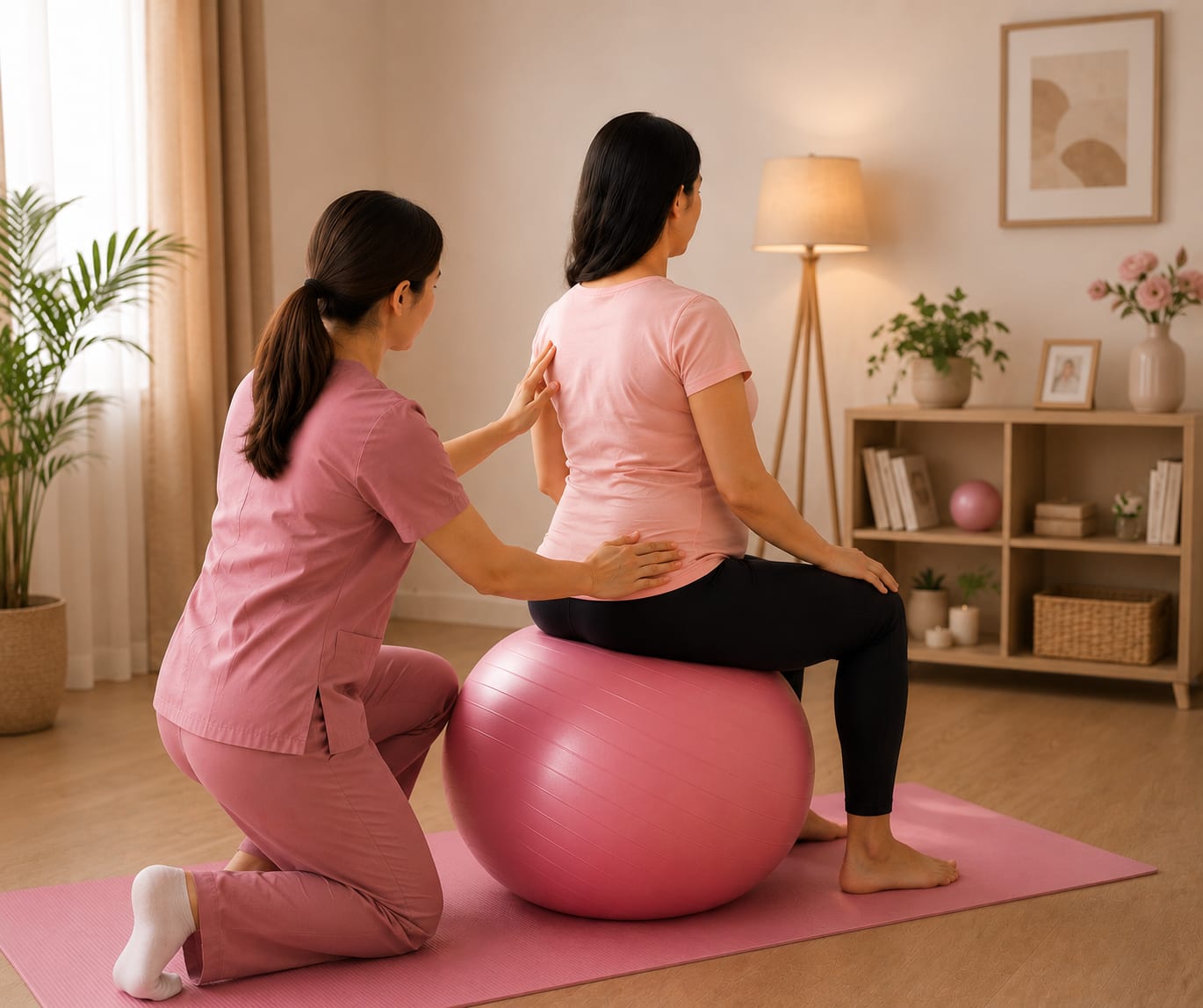
Home physiotherapy session — includes assessment and personalized care.
Rebuild your strength with confidence.
Book a home assessment for postpartum core weakness and begin a personalized rehabilitation programme designed around your recovery and daily life.
Postpartum Core Weakness
Personalized postpartum physiotherapy at home to help rebuild core strength, improve movement control and restore confidence after pregnancy and childbirth.
Signs your core may need rebuilding
Pregnancy and childbirth can change abdominal muscle function, breathing mechanics and movement patterns. Some people notice weakness or reduced confidence during everyday activities.
Rebuild your core progressively — not aggressively
Postpartum Movement Assessment
We assess your posture, breathing, trunk control, movement patterns and functional limitations to understand where rehabilitation should begin.
Deep Core Activation
Your programme may include breathing and controlled abdominal activation exercises designed to rebuild coordination and trunk control gradually.
Progressive Strengthening
As your control improves, exercises can progress from basic movements towards functional strengthening, lifting and everyday activities.
Return to Exercise
Rehabilitation can gradually prepare you for walking, strength training, carrying your baby and eventually more demanding exercise according to your recovery.
What to expect during your postpartum assessment
Recovery History
We discuss your pregnancy, delivery, postpartum recovery, current symptoms and your activity goals.
Movement Assessment
Relevant movement patterns, breathing, trunk control and functional tasks are assessed according to your needs.
Personalized Plan
Your exercise programme is selected according to your current capacity, symptoms and rehabilitation goals.
Progressive Recovery
Exercises are progressed gradually as your strength, coordination and confidence improve.
Your rehabilitation should help with real life
Learn practical movement and lifting strategies that can make carrying, feeding and caring for your baby more comfortable while your strength returns.
Lifting can be gradually reintroduced according to your recovery, with attention to breathing, trunk control and overall strength.
Walking and other low-impact activities can be progressed according to your symptoms and functional tolerance.
Your programme can gradually progress towards resistance training and higher-level exercise when appropriate for your stage of recovery.
Postpartum recovery is not a race. Core rehabilitation should be progressive and individualized, especially when there is pain, pelvic floor dysfunction, abdominal separation or difficulty returning to exercise.
When postpartum symptoms need medical assessment
Not every postpartum symptom is simply muscle weakness. Medical assessment may be appropriate if symptoms are severe, unexplained or worsening.
Postpartum core weakness, answered.
What is postpartum core weakness? +
Why does my core feel weak after pregnancy? +
Can physiotherapy help rebuild postpartum core strength? +
When can I start postpartum core exercises? +
Can I exercise after a C-section? +
Does postpartum core weakness mean I have diastasis recti? +
Can postpartum core rehabilitation be done at home? +
Home physiotherapy session — includes assessment and personalized care.
Rebuild your strength with confidence.
Book a home assessment for postpartum core weakness and begin a personalized rehabilitation programme designed around your recovery and daily life.