
Feel stronger in your body again.
Personalized postpartum physiotherapy at home to help rebuild overall strength, improve endurance and make everyday movement easier after pregnancy and childbirth.
Signs you may be dealing with postpartum weakness
Recovery after pregnancy and childbirth can affect strength, endurance and confidence across the whole body — not only the abdominal muscles.
Build strength from everyday movement to full activity
Whole-Body Strength Assessment
We assess relevant strength, mobility, balance, endurance and functional movements to understand which areas need attention during your postpartum recovery.
Lower-Body Rehabilitation
Your programme may include progressive strengthening for the hips, thighs and legs to make walking, stairs, transfers and carrying easier.
Upper-Body Strength
Postpartum rehabilitation can also address upper-body strength and endurance needed for lifting, carrying and caring for your baby.
Progressive Return to Activity
As strength improves, exercises can progress towards more demanding functional activities and eventually towards your preferred exercise routine.
What to expect during your postpartum assessment
Recovery History
We discuss your pregnancy, delivery, postpartum recovery, current activity level and the tasks that feel difficult.
Functional Assessment
Relevant movements such as sit-to-stand, walking, stairs and lifting are assessed according to your needs.
Strength Programme
Exercises are selected according to your current capacity, symptoms and functional goals.
Progressive Recovery
Resistance, repetitions and functional challenges can be gradually increased as your strength and endurance improve.
Strength that makes daily life easier
Your rehabilitation can prepare you for carrying your baby, lifting everyday objects and managing repeated tasks without excessive fatigue.
Walking capacity can be gradually rebuilt according to your symptoms, strength and current endurance.
Progressive lower-body strengthening can help improve confidence and tolerance during stairs and other weight-bearing activities.
If you want to return to structured exercise, rehabilitation can progressively rebuild the strength and conditioning required for your preferred activities.
Postpartum weakness is not something you need to push through. Strength should be rebuilt progressively, especially when pain, pelvic floor symptoms, fatigue or surgical recovery are also present.
When weakness needs medical assessment
General postpartum deconditioning is different from sudden or unexplained weakness. New or significant symptoms should be assessed appropriately.
Postpartum muscle weakness, answered.
What is postpartum muscle weakness? +
Why do I feel weak after giving birth? +
Can physiotherapy improve postpartum muscle weakness? +
Can I start strength training after childbirth? +
Is postpartum muscle weakness the same as core weakness? +
Can physiotherapy help me return to exercise? +
Can postpartum muscle weakness physiotherapy be done at home? +
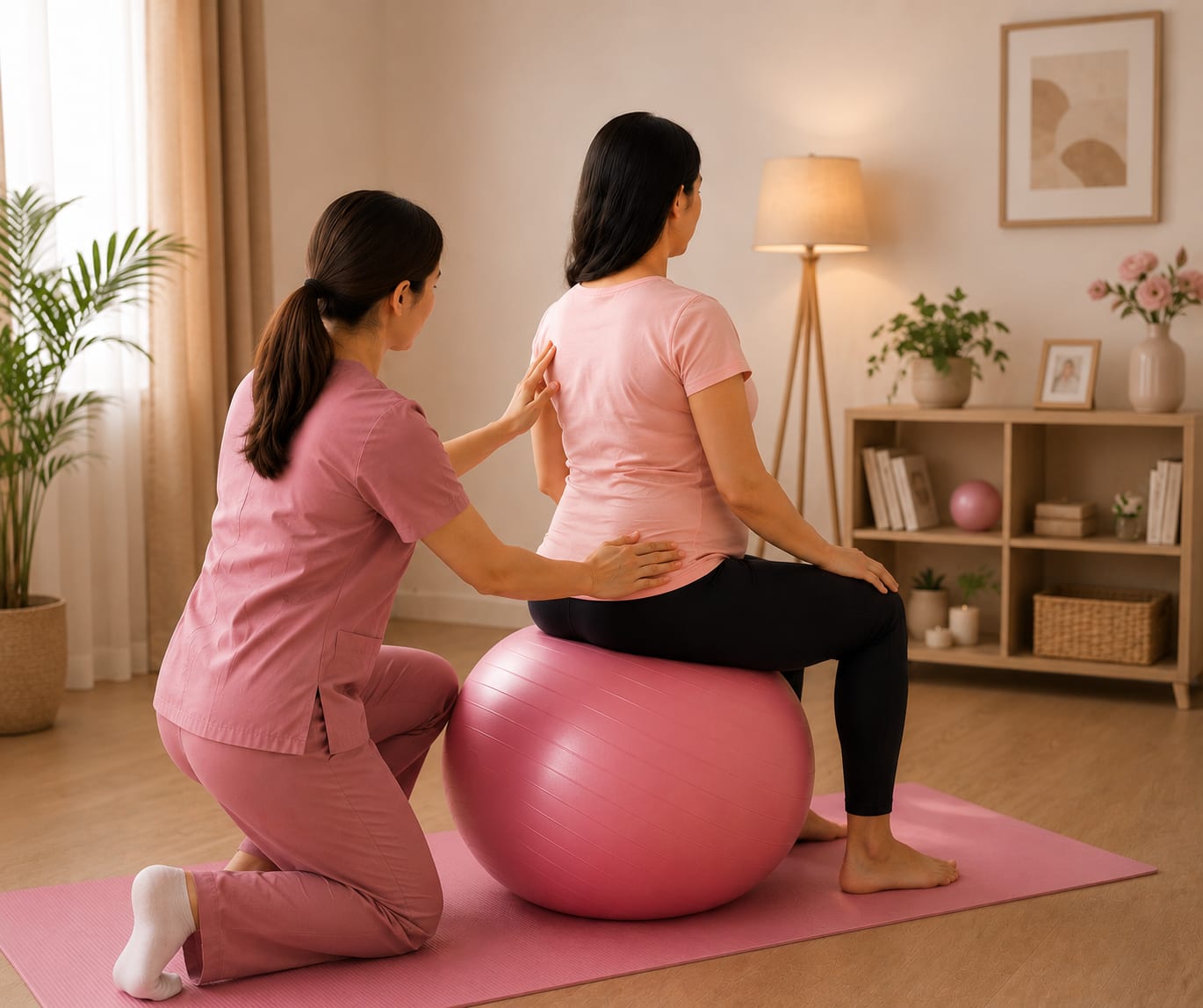
Home physiotherapy session — includes assessment and personalized care.
Feel stronger in everyday life again.
Book a home assessment for postpartum muscle weakness and begin a personalized rehabilitation programme built around your recovery, routine and goals.
Feel stronger in your body again.
Personalized postpartum physiotherapy at home to help rebuild overall strength, improve endurance and make everyday movement easier after pregnancy and childbirth.
Signs you may be dealing with postpartum weakness
Recovery after pregnancy and childbirth can affect strength, endurance and confidence across the whole body — not only the abdominal muscles.
Build strength from everyday movement to full activity
Whole-Body Strength Assessment
We assess relevant strength, mobility, balance, endurance and functional movements to understand which areas need attention during your postpartum recovery.
Lower-Body Rehabilitation
Your programme may include progressive strengthening for the hips, thighs and legs to make walking, stairs, transfers and carrying easier.
Upper-Body Strength
Postpartum rehabilitation can also address upper-body strength and endurance needed for lifting, carrying and caring for your baby.
Progressive Return to Activity
As strength improves, exercises can progress towards more demanding functional activities and eventually towards your preferred exercise routine.
What to expect during your postpartum assessment
Recovery History
We discuss your pregnancy, delivery, postpartum recovery, current activity level and the tasks that feel difficult.
Functional Assessment
Relevant movements such as sit-to-stand, walking, stairs and lifting are assessed according to your needs.
Strength Programme
Exercises are selected according to your current capacity, symptoms and functional goals.
Progressive Recovery
Resistance, repetitions and functional challenges can be gradually increased as your strength and endurance improve.
Strength that makes daily life easier
Your rehabilitation can prepare you for carrying your baby, lifting everyday objects and managing repeated tasks without excessive fatigue.
Walking capacity can be gradually rebuilt according to your symptoms, strength and current endurance.
Progressive lower-body strengthening can help improve confidence and tolerance during stairs and other weight-bearing activities.
If you want to return to structured exercise, rehabilitation can progressively rebuild the strength and conditioning required for your preferred activities.
Postpartum weakness is not something you need to push through. Strength should be rebuilt progressively, especially when pain, pelvic floor symptoms, fatigue or surgical recovery are also present.
When weakness needs medical assessment
General postpartum deconditioning is different from sudden or unexplained weakness. New or significant symptoms should be assessed appropriately.
Postpartum muscle weakness, answered.
What is postpartum muscle weakness? +
Why do I feel weak after giving birth? +
Can physiotherapy improve postpartum muscle weakness? +
Can I start strength training after childbirth? +
Is postpartum muscle weakness the same as core weakness? +
Can physiotherapy help me return to exercise? +
Can postpartum muscle weakness physiotherapy be done at home? +
Home physiotherapy session — includes assessment and personalized care.
Feel stronger in everyday life again.
Book a home assessment for postpartum muscle weakness and begin a personalized rehabilitation programme built around your recovery, routine and goals.