
Hip Replacement
Rehabilitation
Structured physiotherapy after hip replacement to restore movement, rebuild strength, improve walking and help you return to everyday activities safely.
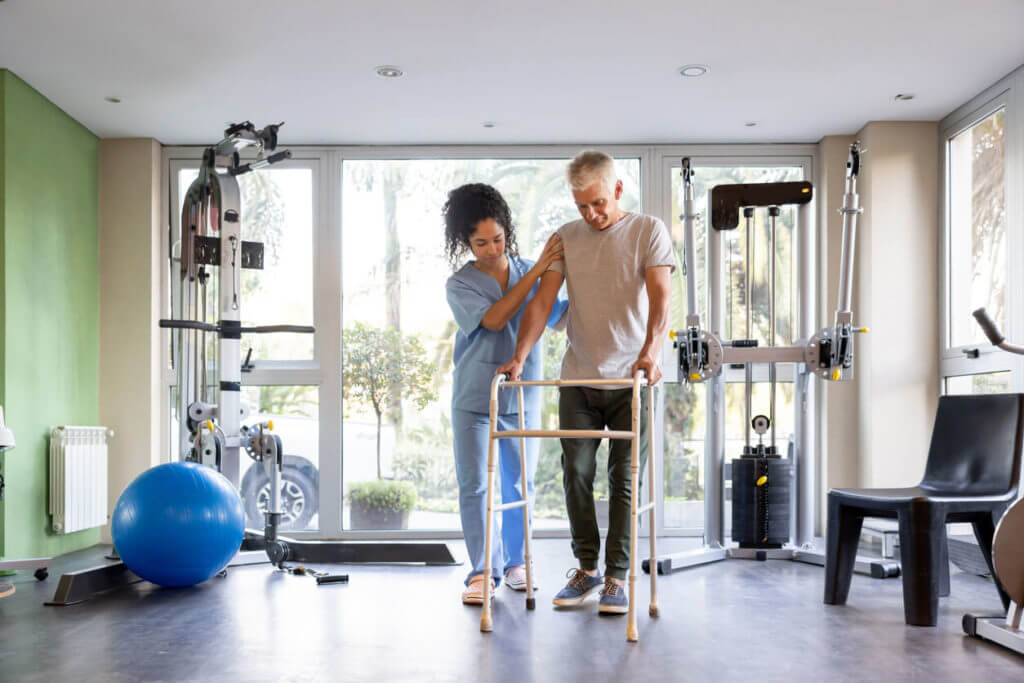
Your new hip needs your muscles to work again.
Hip replacement can relieve pain caused by severe joint damage, but recovery does not end with surgery. The muscles around the hip and lower limb need to regain strength, movement and coordination.
Physiotherapy focuses on helping you move safely, progress walking, improve strength and gradually return to functional activities.
The American Academy of Orthopaedic Surgeons supports either formal postoperative physical therapy or appropriately prescribed home exercise after total hip arthroplasty for symptomatic hip osteoarthritis.
Before surgery or after surgery, physiotherapy has a role.
The exact programme depends on your stage of recovery and the instructions provided by your surgical team.
Before Surgery
- Maintain available strength and mobility
- Prepare for walking with an assistive device
- Improve general physical capacity
- Learn what to expect during early recovery
After Surgery
- Restore safe movement and walking
- Progress hip and lower-limb strength
- Improve balance and functional mobility
- Gradually return to everyday activities
What rehabilitation works on.
Treatment progresses according to your symptoms, strength, mobility and functional goals.
Pain & Swelling
Appropriate positioning, activity management and exercise can help manage postoperative discomfort and swelling.
Hip & Leg Strength
Progressive exercises help rebuild the strength needed for standing, walking and daily activities.
Walking
Walking is progressed from the appropriate walking aid toward greater independence as strength and balance improve.
Balance & Mobility
Balance, transfers, stairs and functional movement can be trained as recovery progresses.
Return to Activity
Rehabilitation gradually prepares you for normal household, community and low-impact activities.
Progress, not pressure.
Recovery varies between people. Your age, general health, pre-surgery mobility, surgical details and rehabilitation progress can all influence the pace.
Safe Mobility
Early rehabilitation commonly focuses on getting moving safely, basic exercises and walking with the appropriate aid.
Strength & Confidence
Walking distance, strength, balance and functional activities are gradually progressed.
Independent Function
The goal is to return to comfortable everyday movement and appropriate low-impact activity.
Rehabilitation should be guided by evidence and progress.
AAOS clinical guidance reports moderate evidence supporting either formal postoperative physical therapy or unsupervised home exercise after total hip arthroplasty for symptomatic hip osteoarthritis.
Start your recovery with the right plan.
Home physiotherapy focused on strength, mobility, walking and functional recovery after hip replacement.
Sources
1. American Academy of Orthopaedic Surgeons (AAOS).
Management of Osteoarthritis of the Hip Clinical
Practice Guideline.
View guideline
2. AAOS OrthoInfo.
Total Hip Replacement Exercise Guide.
View resource
3. NHS.
Recovering from a hip replacement.
View resource
Hip Replacement
Rehabilitation
Structured physiotherapy after hip replacement to restore movement, rebuild strength, improve walking and help you return to everyday activities safely.
Your new hip needs your muscles to work again.
Hip replacement can relieve pain caused by severe joint damage, but recovery does not end with surgery. The muscles around the hip and lower limb need to regain strength, movement and coordination.
Physiotherapy focuses on helping you move safely, progress walking, improve strength and gradually return to functional activities.
The American Academy of Orthopaedic Surgeons supports either formal postoperative physical therapy or appropriately prescribed home exercise after total hip arthroplasty for symptomatic hip osteoarthritis.
Before surgery or after surgery, physiotherapy has a role.
The exact programme depends on your stage of recovery and the instructions provided by your surgical team.
Before Surgery
- Maintain available strength and mobility
- Prepare for walking with an assistive device
- Improve general physical capacity
- Learn what to expect during early recovery
After Surgery
- Restore safe movement and walking
- Progress hip and lower-limb strength
- Improve balance and functional mobility
- Gradually return to everyday activities
What rehabilitation works on.
Treatment progresses according to your symptoms, strength, mobility and functional goals.
Pain & Swelling
Appropriate positioning, activity management and exercise can help manage postoperative discomfort and swelling.
Hip & Leg Strength
Progressive exercises help rebuild the strength needed for standing, walking and daily activities.
Walking
Walking is progressed from the appropriate walking aid toward greater independence as strength and balance improve.
Balance & Mobility
Balance, transfers, stairs and functional movement can be trained as recovery progresses.
Return to Activity
Rehabilitation gradually prepares you for normal household, community and low-impact activities.
Progress, not pressure.
Recovery varies between people. Your age, general health, pre-surgery mobility, surgical details and rehabilitation progress can all influence the pace.
Safe Mobility
Early rehabilitation commonly focuses on getting moving safely, basic exercises and walking with the appropriate aid.
Strength & Confidence
Walking distance, strength, balance and functional activities are gradually progressed.
Independent Function
The goal is to return to comfortable everyday movement and appropriate low-impact activity.
Rehabilitation should be guided by evidence and progress.
AAOS clinical guidance reports moderate evidence supporting either formal postoperative physical therapy or unsupervised home exercise after total hip arthroplasty for symptomatic hip osteoarthritis.
Start your recovery with the right plan.
Home physiotherapy focused on strength, mobility, walking and functional recovery after hip replacement.
Sources
1. American Academy of Orthopaedic Surgeons (AAOS).
Management of Osteoarthritis of the Hip Clinical
Practice Guideline.
View guideline
2. AAOS OrthoInfo.
Total Hip Replacement Exercise Guide.
View resource
3. NHS.
Recovering from a hip replacement.
View resource