
Cervical Spondylosis
Degenerative changes can affect cervical discs, vertebrae and facet joints and may contribute to pain or stiffness.
Simple: “Wear and tear” changes may make the neck feel
stiff or uncomfortable.
Evidence-informed physiotherapy for neck pain, stiffness, cervical spondylosis, disc-related problems and nerve-related symptoms.

The cervical spine contains seven vertebrae, intervertebral discs, facet joints, muscles and nerves. Problems affecting these structures can contribute to pain, stiffness and restricted movement.
Neck symptoms may develop from prolonged postures, repetitive loading, muscle strain, degenerative changes, disc-related problems or irritation of cervical nerve roots.
Different cervical conditions can produce similar symptoms. Clinical assessment helps determine the most appropriate rehabilitation approach.
Degenerative changes can affect cervical discs, vertebrae and facet joints and may contribute to pain or stiffness.
A cervical disc may bulge or herniate and, in some cases, irritate a nearby nerve root.

Irritation or compression of a cervical nerve root may cause pain, tingling, numbness or weakness extending into the arm.
Symptoms vary depending on the underlying cause and whether muscles, joints, discs or nerves are involved.
Treatment is individualized according to the assessment, symptoms, physical findings and functional goals.

Controlled cervical movements may help improve comfortable range of motion and reduce movement restriction.
Progressive deep neck flexor and cervical control exercises can improve muscular endurance and movement control.

Selected manual techniques may be used as an adjunct to an active rehabilitation program when clinically appropriate.
TENS or other electrical stimulation modalities may be used as an adjunct for selected patients and treatment goals.

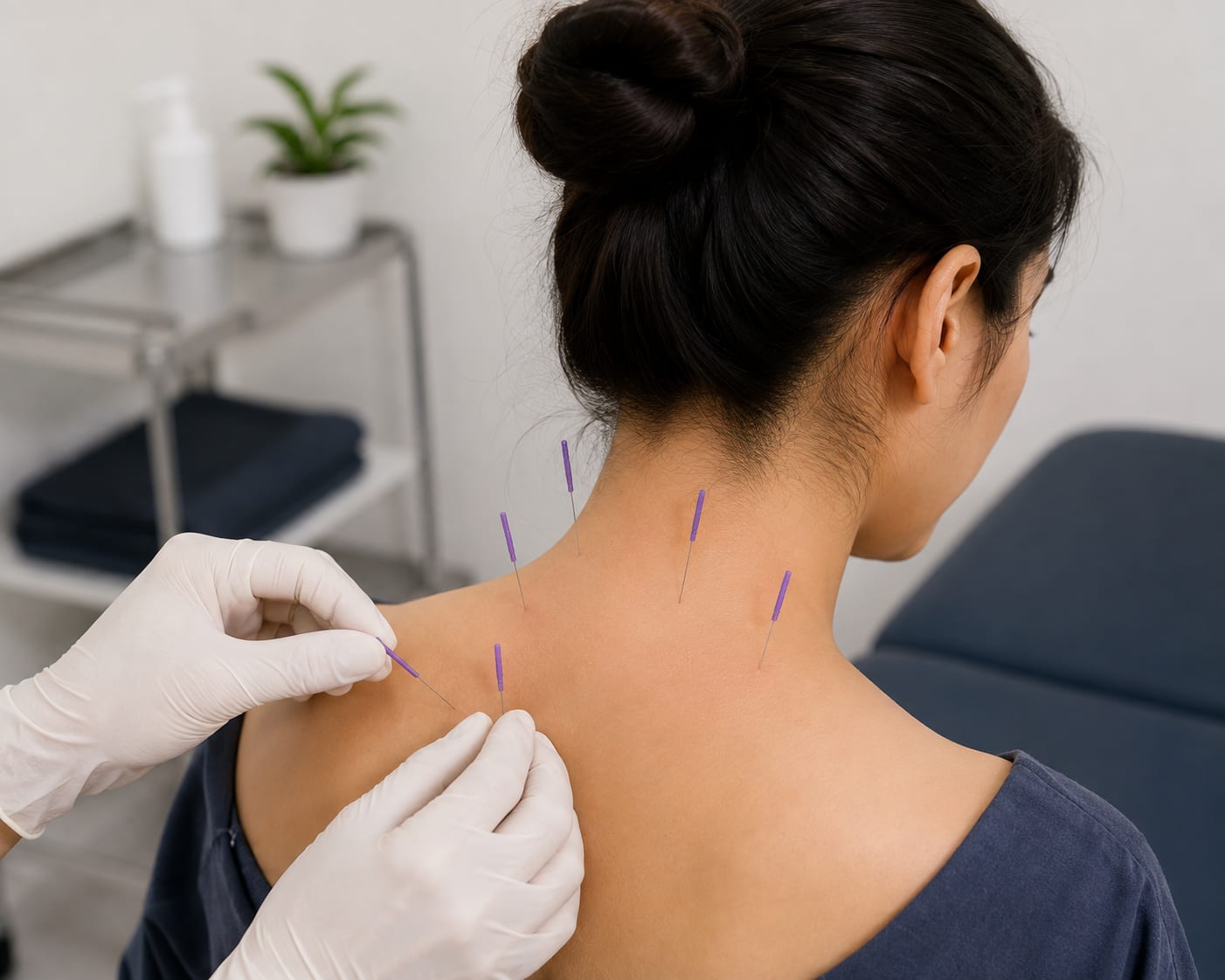
Dry needling may be considered for selected myofascial pain presentations involving appropriate muscles.
Education and movement strategies can help improve tolerance to prolonged sitting, screen work and everyday activity.
Improve comfort and tolerance to everyday movement.
Gradually improve cervical range of motion.
Improve neck and upper-quarter muscular endurance and control.
Most neck pain is not an emergency. However, certain symptoms should be medically assessed promptly rather than treated as routine muscular neck pain.
Do not delay appropriate medical evaluation if neck pain is associated with new or rapidly worsening neurological or systemic symptoms.
If neck pain or stiffness is affecting your work, sleep, exercise or daily activities, book an assessment to understand what may be contributing to your symptoms.
BOOK YOUR ASSESSMENT NOW Or Call 9990150480Don't let persistent neck pain continue to interfere with your work, sleep and everyday activities.
Evidence-informed physiotherapy for neck pain, stiffness, cervical spondylosis, disc-related problems and nerve-related symptoms.
The cervical spine contains seven vertebrae, intervertebral discs, facet joints, muscles and nerves. Problems affecting these structures can contribute to pain, stiffness and restricted movement.
Neck symptoms may develop from prolonged postures, repetitive loading, muscle strain, degenerative changes, disc-related problems or irritation of cervical nerve roots.
Different cervical conditions can produce similar symptoms. Clinical assessment helps determine the most appropriate rehabilitation approach.
Degenerative changes can affect cervical discs, vertebrae and facet joints and may contribute to pain or stiffness.
A cervical disc may bulge or herniate and, in some cases, irritate a nearby nerve root.
Irritation or compression of a cervical nerve root may cause pain, tingling, numbness or weakness extending into the arm.
Symptoms vary depending on the underlying cause and whether muscles, joints, discs or nerves are involved.
Treatment is individualized according to the assessment, symptoms, physical findings and functional goals.
Controlled cervical movements may help improve comfortable range of motion and reduce movement restriction.
Progressive deep neck flexor and cervical control exercises can improve muscular endurance and movement control.
Selected manual techniques may be used as an adjunct to an active rehabilitation program when clinically appropriate.
TENS or other electrical stimulation modalities may be used as an adjunct for selected patients and treatment goals.
Dry needling may be considered for selected myofascial pain presentations involving appropriate muscles.
Education and movement strategies can help improve tolerance to prolonged sitting, screen work and everyday activity.
Improve comfort and tolerance to everyday movement.
Gradually improve cervical range of motion.
Improve neck and upper-quarter muscular endurance and control.
Most neck pain is not an emergency. However, certain symptoms should be medically assessed promptly rather than treated as routine muscular neck pain.
Do not delay appropriate medical evaluation if neck pain is associated with new or rapidly worsening neurological or systemic symptoms.
If neck pain or stiffness is affecting your work, sleep, exercise or daily activities, book an assessment to understand what may be contributing to your symptoms.
BOOK YOUR ASSESSMENT NOW Or Call 9990150480Don't let persistent neck pain continue to interfere with your work, sleep and everyday activities.