
Know when to seek medical help.
After knee replacement surgery, certain symptoms should not be treated as routine post-operative discomfort. Contact your surgeon or seek urgent medical assessment when symptoms are severe, sudden or rapidly worsening.
- Severe or rapidly increasing knee swelling and pain
- Fever or significant redness/warmth around the surgical area
- Sudden calf pain or swelling
- Chest pain or sudden difficulty breathing
- New wound drainage or significant bleeding
Knee Replacement
Rehabilitation
Restore Movement. Rebuild Strength. Regain Independence.
Total knee replacement can reduce pain and improve mobility, but surgery is only one part of recovery. Structured physiotherapy helps restore knee movement, muscle strength, walking ability and confidence in everyday activities.
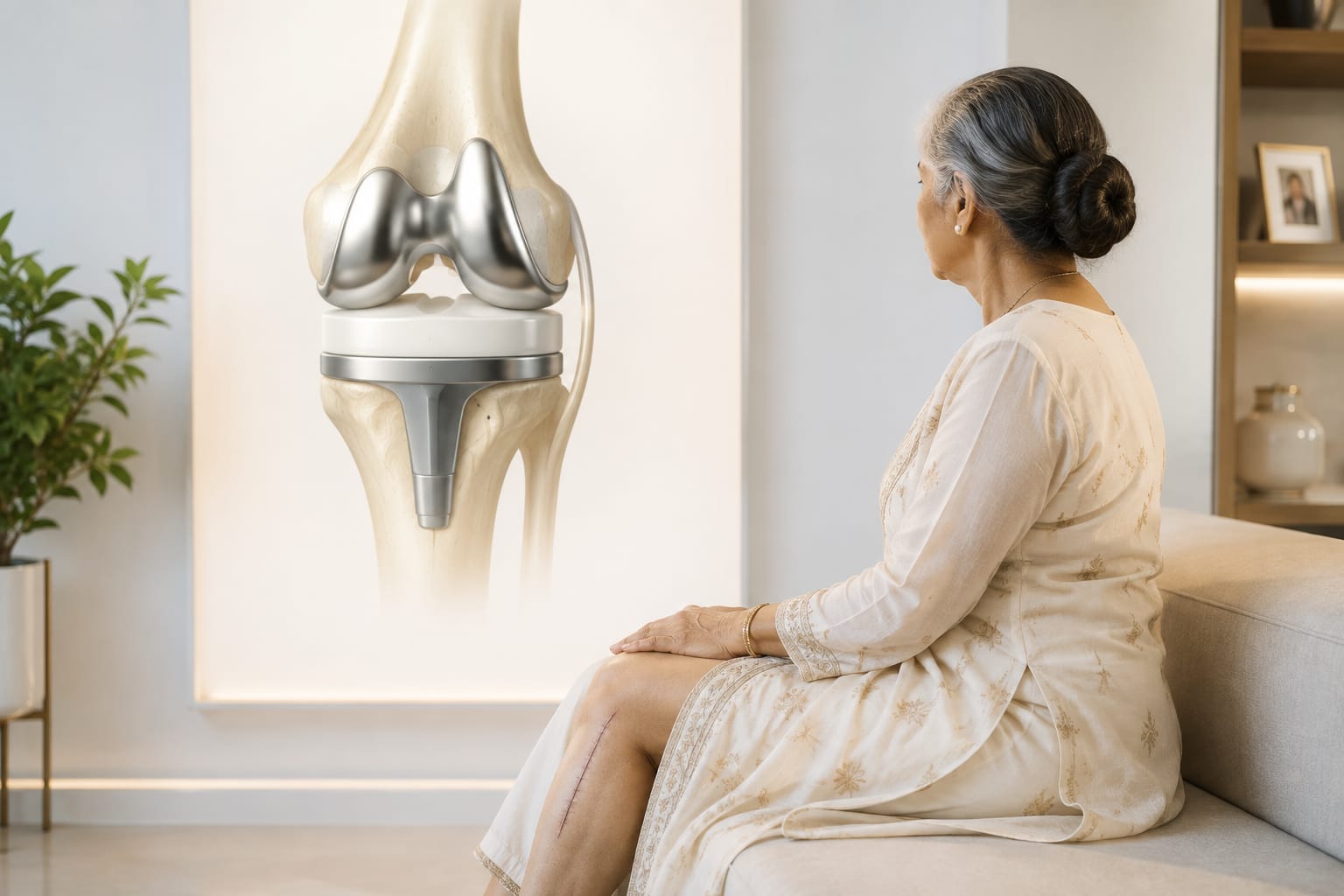
The surgery is the start.
Knee replacement, medically known as total knee arthroplasty when the entire joint is replaced, is performed to reduce pain and improve function when the knee joint is severely damaged.
After surgery, the knee needs time to heal while the muscles, joint movement, balance and walking pattern are progressively retrained.
Physiotherapy helps guide this recovery safely and progressively according to the surgeon's instructions, patient's condition and functional goals.

The first phase is about safe recovery.
Early rehabilitation commonly focuses on controlling post-operative symptoms, restoring basic knee movement, activating muscles and beginning safe mobility.
Getting the knee moving again.
After surgery, knee stiffness can make activities such as sitting, standing, walking and climbing stairs difficult. Progressive range-of-motion work is an important part of rehabilitation.


Build strength to move confidently.
The quadriceps and other lower-limb muscles can become weak after surgery. Progressive strengthening helps support standing, walking, transfers and stair activities.
From assisted walking to independent mobility.
Walking after knee replacement is gradually progressed. Depending on the patient's strength, balance and medical instructions, rehabilitation may progress from assisted walking towards greater independence.

Getting back to the stairs.
Stair climbing requires strength, balance, knee movement and confidence. It is introduced progressively when the patient is medically ready.


The final goal is independence.
Knee replacement rehabilitation should ultimately translate into better everyday function — not just improved measurements on an assessment sheet.
Recovery happens in stages.
The exact timeline varies between patients. Progression should be based on healing, symptoms, movement, strength, balance, functional ability and the surgeon's advice.
Protection & Mobility
Focus on safe transfers, basic movement, swelling management, muscle activation and appropriate walking.
Movement & Strength
Progressive knee movement, strengthening and improved walking capacity become increasingly important.
Daily Activities
Rehabilitation becomes more focused on stairs, balance, walking and practical everyday activities.
Long-Term Function
The goal is to maintain strength, mobility and confidence while returning to appropriate daily activities.
A personalised rehabilitation plan.
Every knee replacement patient starts from a different level. Age, pre-operative strength, surgical details, pain, swelling, mobility and other health factors can influence recovery.
Your new knee needs a strong recovery.
Start structured physiotherapy rehabilitation focused on movement, strength, walking and everyday independence.
Know when to seek medical help.
After knee replacement surgery, certain symptoms should not be treated as routine post-operative discomfort. Contact your surgeon or seek urgent medical assessment when symptoms are severe, sudden or rapidly worsening.
- Severe or rapidly increasing knee swelling and pain
- Fever or significant redness/warmth around the surgical area
- Sudden calf pain or swelling
- Chest pain or sudden difficulty breathing
- New wound drainage or significant bleeding
Knee Replacement
Rehabilitation
Restore Movement. Rebuild Strength. Regain Independence.
Total knee replacement can reduce pain and improve mobility, but surgery is only one part of recovery. Structured physiotherapy helps restore knee movement, muscle strength, walking ability and confidence in everyday activities.
The surgery is the start.
Knee replacement, medically known as total knee arthroplasty when the entire joint is replaced, is performed to reduce pain and improve function when the knee joint is severely damaged.
After surgery, the knee needs time to heal while the muscles, joint movement, balance and walking pattern are progressively retrained.
Physiotherapy helps guide this recovery safely and progressively according to the surgeon's instructions, patient's condition and functional goals.
The first phase is about safe recovery.
Early rehabilitation commonly focuses on controlling post-operative symptoms, restoring basic knee movement, activating muscles and beginning safe mobility.
Getting the knee moving again.
After surgery, knee stiffness can make activities such as sitting, standing, walking and climbing stairs difficult. Progressive range-of-motion work is an important part of rehabilitation.
Build strength to move confidently.
The quadriceps and other lower-limb muscles can become weak after surgery. Progressive strengthening helps support standing, walking, transfers and stair activities.
From assisted walking to independent mobility.
Walking after knee replacement is gradually progressed. Depending on the patient's strength, balance and medical instructions, rehabilitation may progress from assisted walking towards greater independence.
Getting back to the stairs.
Stair climbing requires strength, balance, knee movement and confidence. It is introduced progressively when the patient is medically ready.
The final goal is independence.
Knee replacement rehabilitation should ultimately translate into better everyday function — not just improved measurements on an assessment sheet.
Recovery happens in stages.
The exact timeline varies between patients. Progression should be based on healing, symptoms, movement, strength, balance, functional ability and the surgeon's advice.
Protection & Mobility
Focus on safe transfers, basic movement, swelling management, muscle activation and appropriate walking.
Movement & Strength
Progressive knee movement, strengthening and improved walking capacity become increasingly important.
Daily Activities
Rehabilitation becomes more focused on stairs, balance, walking and practical everyday activities.
Long-Term Function
The goal is to maintain strength, mobility and confidence while returning to appropriate daily activities.
A personalised rehabilitation plan.
Every knee replacement patient starts from a different level. Age, pre-operative strength, surgical details, pain, swelling, mobility and other health factors can influence recovery.
Your new knee needs a strong recovery.
Start structured physiotherapy rehabilitation focused on movement, strength, walking and everyday independence.