
Skip to Content
Parkinson's Rehabilitation

Parkinson's?
Move With Greater Confidence.

Specialized physiotherapy for people living with Parkinson's disease, focused on movement, walking, balance, strength and everyday independence — delivered at home.

Parkinson's rehabilitation should be individualized according to disease stage, mobility, balance, functional limitations, medical status and personal goals.
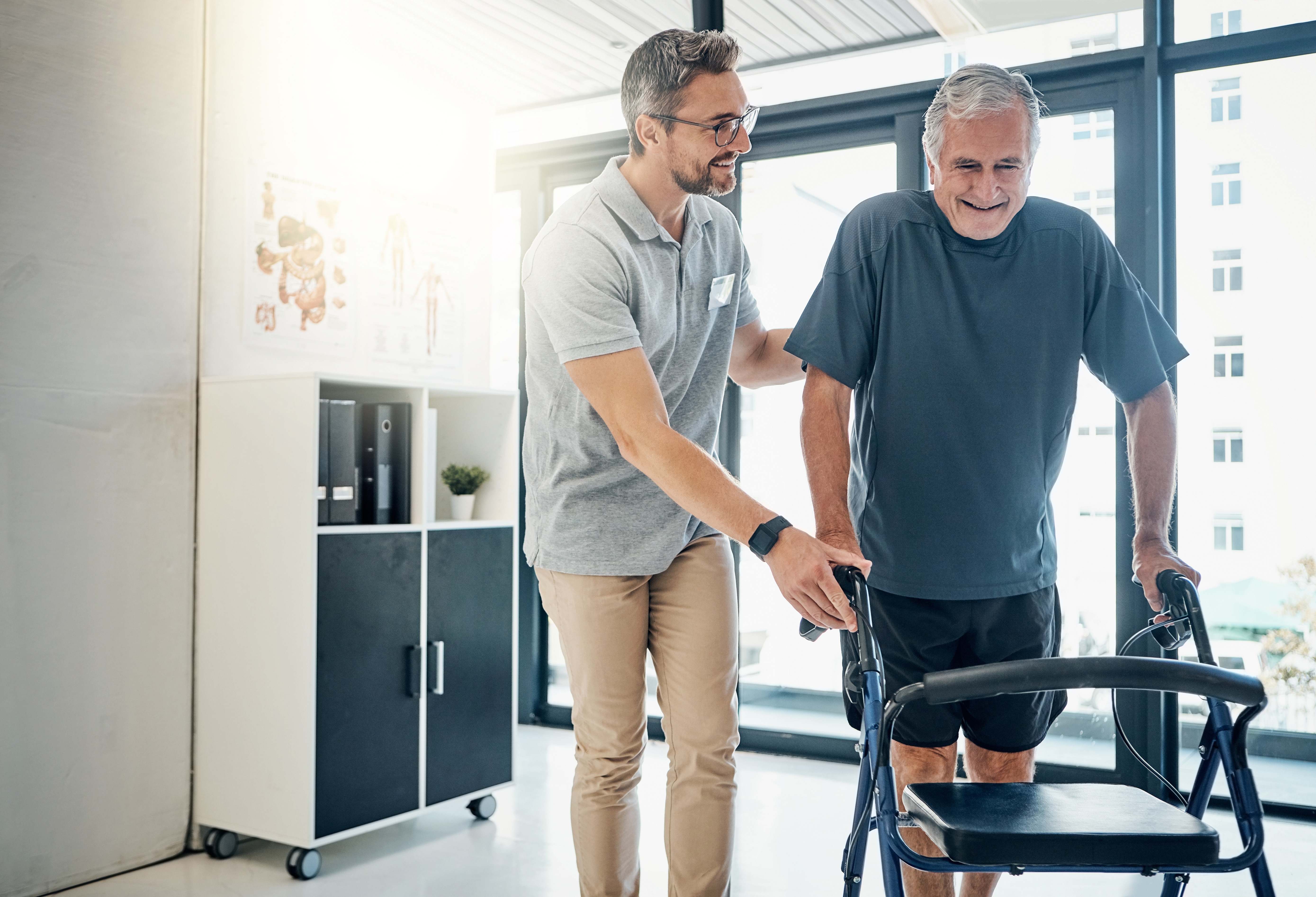
Physiotherapy and walking rehabilitation for Parkinson's disease
Parkinson's Physiotherapy

Helping You Keep Moving Through Every Stage

Parkinson's disease can affect movement in different ways, including walking, balance, posture, movement speed and the ability to perform everyday activities.

Physiotherapy uses exercise, gait training, balance training, movement strategies and task-specific practice to address functional movement problems.

Treatment is adapted to the individual rather than using the same programme for every person.

What We Work On

Physiotherapy Focused on Everyday Movement

Rehabilitation targets the movement problems that affect mobility, confidence and everyday function.

01

Walking & Gait

Gait practice and movement strategies to address walking difficulties and improve functional mobility.

02

Balance Training

Progressive balance exercises designed around individual postural and mobility challenges.

03

Movement & Bradykinesia

Task-specific movement practice and strategies for difficulties related to slow or reduced movement.

04

Strength & Fitness

Progressive strengthening and appropriate physical activity to support mobility and physical capacity.

05

Posture & Mobility

Exercises and movement practice addressing posture, mobility and functional movement.

06

Daily Activities

Task-specific practice for transfers, turning, getting out of bed, walking and other daily activities.

Rehabilitation Approach

A Progressive, Individualized Programme

STEP 01

Assessment

Assessment of walking, balance, strength, transfers and functional movement.

STEP 02

Movement Strategy

Identify specific movement difficulties and select appropriate rehabilitation strategies.

STEP 03

Progressive Training

Progress balance, gait, strength and functional exercises according to ability.

STEP 04

Long-Term Movement

Encourage continued exercise and physical activity according to individual needs and goals.

Your Physiotherapy Sessions

Rehabilitation Built Around How You Move

Your programme can be adjusted as mobility, symptoms and functional needs change.

Gait Training

Walking practice and appropriate movement strategies.

Balance Training

Progressive exercises targeting postural control.

Strength Training

Progressive resistance exercise where appropriate.

External Cueing

Visual, auditory or other cueing strategies when appropriate.

Functional Training

Practice of transfers and everyday movement tasks.

Home Exercise Programme

Individualized exercises for continued practice.

Research Supporting Physiotherapy

Evidence Behind Parkinson's Rehabilitation

Clinical guidelines and systematic reviews support exercise and physiotherapy interventions for several movement-related problems associated with Parkinson's disease.

2024
Cochrane Review

Physical Exercise for People With Parkinson's Disease

A large systematic review and network meta-analysis found evidence of beneficial effects for many forms of physical exercise. Gait, balance and functional training probably produced a moderate beneficial effect on motor signs compared with passive control.

154 RCTs • 7,837 participants
Read Research →
2022
Clinical Practice Guideline

Physical Therapist Management of Parkinson Disease

The American Physical Therapy Association guideline provides evidence-based recommendations covering aerobic exercise, resistance training, balance, external cueing, gait training, task-specific training and other physical therapy interventions.

American Physical Therapy Association
Read Guideline →
2024
Network Meta-Analysis

Exercise, Balance & Mobility in Parkinson's Disease

This network meta-analysis evaluated different physical exercise interventions for balance, postural stability and general mobility in people with Parkinson's disease.

Balance • Postural Stability • Mobility
Read Research →
2024
Systematic Review

Physiotherapy, Daily Activities & Quality of Life

A systematic review examined physiotherapeutic interventions targeting hand dexterity, activities of daily living and quality of life in people living with Parkinson's disease.

Function • ADLs • Quality of Life
Read Research →
What the evidence means: Exercise and physiotherapy can support important movement and functional outcomes in Parkinson's disease. However, Parkinson's is a progressive neurological condition, and physiotherapy does not cure the disease. Treatment should be individualized according to the person's abilities, symptoms, disease stage and goals.
Physiotherapy At Home

Practice Movement Where Daily Life Actually Happens

Home physiotherapy allows functional movement strategies to be practiced within the patient's everyday environment.

Depending on individual needs, rehabilitation can include walking, transfers, turning, balance, strengthening and home exercise guidance.

  • Walking & Gait Practice
  • Balance & Mobility Training
  • Bed & Chair Transfer Practice
  • Strength & Functional Exercise
  • Individualized Home Exercise Programme
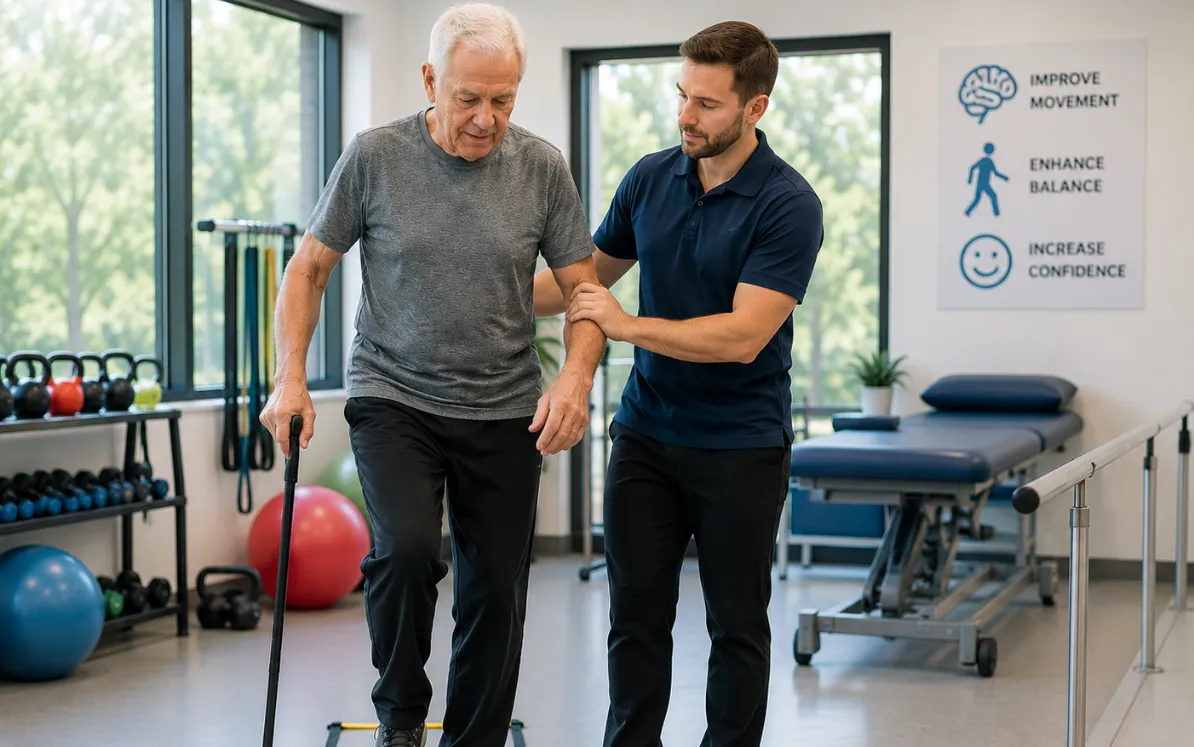
Parkinson's physiotherapy gait and balance training
Parkinson's Home Rehabilitation

Keep Moving. Keep Practicing. Keep Your Independence.

Get individualized Parkinson's physiotherapy and rehabilitation at home across Noida, Greater Noida and Noida Extension.

Clinical Evidence & References

  1. Ernst M, et al. Physical exercise for people with Parkinson's disease: a systematic review and network meta-analysis. Cochrane Database of Systematic Reviews.
    View on PubMed →
  2. Osborne JA, et al. Physical Therapist Management of Parkinson Disease: A Clinical Practice Guideline From the American Physical Therapy Association. Physical Therapy. 2022.
    View on PubMed →
  3. Lorenzo-García P, et al. Effects of physical exercise interventions on balance, postural stability and general mobility in Parkinson's disease: a network meta-analysis. 2024.
    View on PubMed →
  4. Vasu DT, et al. Evidence-Based Physiotherapeutic Interventions Enhancing Hand Dexterity, Activities of Daily Living and Quality of Life of Parkinson's Disease Patients: A Systematic Review. 2024.
    View on PubMed →
Medical Disclaimer: This page provides general educational information and does not replace individualized medical or physiotherapy assessment. Parkinson's rehabilitation should be planned according to the patient's symptoms, disease stage, medical status, fall risk, medications and functional goals.