

Cerebral Palsy
Rehabilitation
Individualized physiotherapy focused on movement, strength, balance, mobility and functional independence for children and adults living with cerebral palsy.
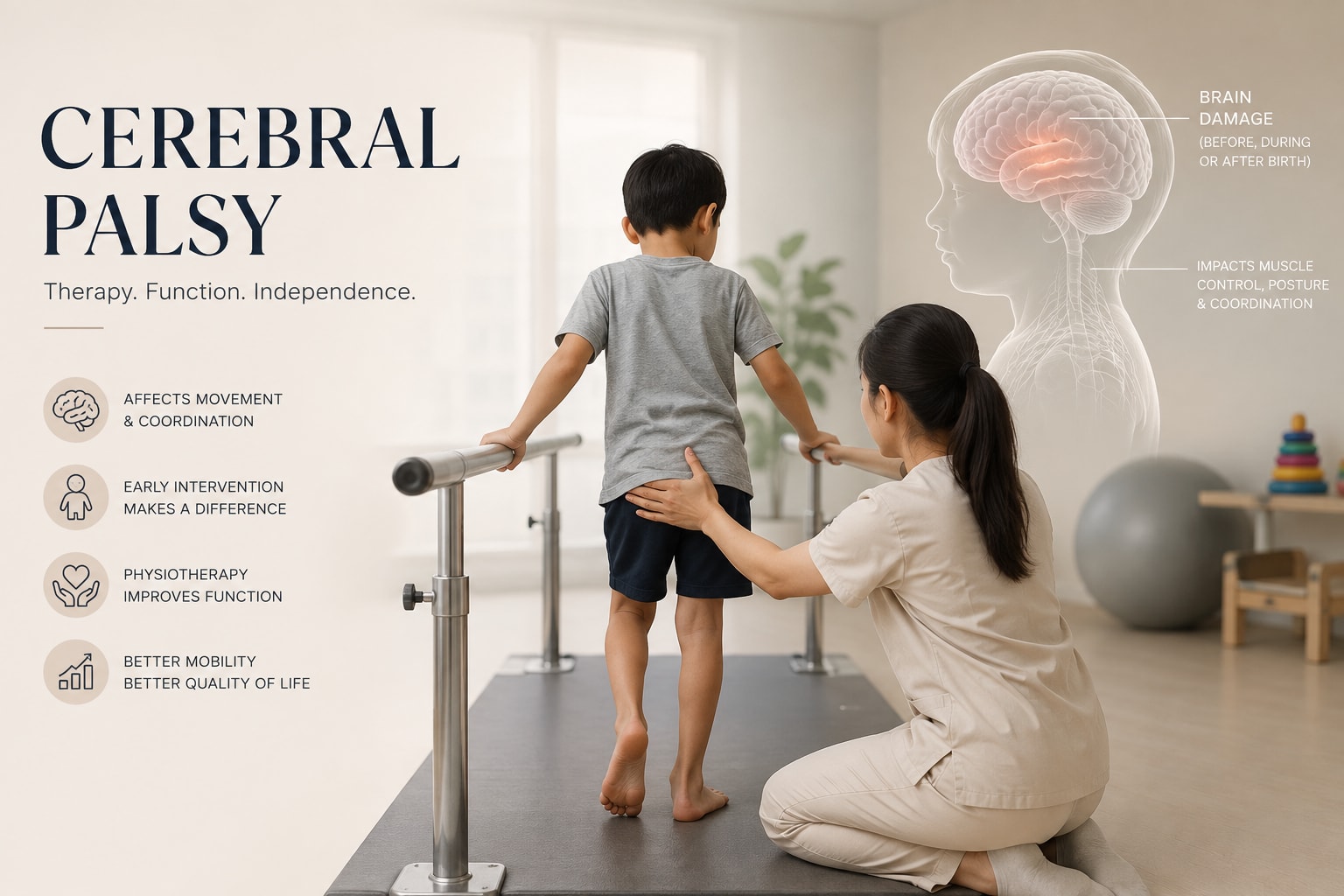
Rehabilitation is about movement and participation.
Cerebral palsy is a group of conditions affecting movement and posture, caused by disturbances in the developing brain.
It can affect muscle tone, coordination, balance, walking, hand function and everyday activities. The presentation is different for every individual.
Physiotherapy aims to support movement, physical function and participation while helping the person work toward meaningful individual goals.
Focused on the abilities that matter most.
Treatment is tailored to the individual's movement pattern, functional needs and rehabilitation goals.
Movement & Mobility
Encourage efficient movement and improve the person's ability to move around their environment.
Strength & Control
Appropriate strengthening and active movement can support functional activities and mobility.
Balance & Coordination
Training can target postural control, balance reactions and coordination needed for daily tasks.
Walking & Transfers
Rehabilitation can focus on standing, transfers, walking and safe movement where appropriate.
Functional Independence
Therapy can incorporate meaningful everyday tasks to support participation and independence.
Small improvements can make everyday life easier.
Goals should be meaningful to the child, adult and family, and should reflect real-life activities.
Everyday Movement
Work toward activities such as sitting, standing, walking, reaching, transfers and other age-appropriate movement tasks.
Participation
Rehabilitation can support participation in home, school, work, play and community activities according to the person's abilities.
Progress through purposeful practice.
Cerebral palsy is a lifelong condition, but rehabilitation can help people maintain and develop physical function throughout different stages of life.
Understand the Individual
Assess movement, tone, strength, balance, mobility and functional goals.
Build Useful Skills
Practise meaningful movements and activities at an appropriate level of challenge.
Maintain Function
Continue appropriate physical activity, mobility practice and functional training.
Cerebral Palsy rehabilitation, explained simply.
Common questions about physiotherapy and cerebral palsy rehabilitation.
Can physiotherapy help cerebral palsy?
Can physiotherapy cure cerebral palsy?
Can a child with cerebral palsy learn to walk?
Does cerebral palsy physiotherapy help with balance?
Can adults with cerebral palsy benefit from physiotherapy?
Can cerebral palsy physiotherapy be done at home?
Rehabilitation should be meaningful and goal-focused.
Clinical guidance for cerebral palsy emphasizes individualized management, participation, physical activity and interventions directed toward meaningful functional goals.
View NICE Cerebral Palsy Guideline →
Support better movement. Build greater independence.
Individualized home physiotherapy for cerebral palsy, focused on movement, mobility, balance and meaningful everyday function.
Sources
NICE — Cerebral palsy in under 25s:
assessment and management.
View NICE Guideline
National Institute of Neurological Disorders and
Stroke — Cerebral Palsy.
View NINDS Information
Cerebral Palsy
Rehabilitation
Individualized physiotherapy focused on movement, strength, balance, mobility and functional independence for children and adults living with cerebral palsy.
Rehabilitation is about movement and participation.
Cerebral palsy is a group of conditions affecting movement and posture, caused by disturbances in the developing brain.
It can affect muscle tone, coordination, balance, walking, hand function and everyday activities. The presentation is different for every individual.
Physiotherapy aims to support movement, physical function and participation while helping the person work toward meaningful individual goals.
Focused on the abilities that matter most.
Treatment is tailored to the individual's movement pattern, functional needs and rehabilitation goals.
Movement & Mobility
Encourage efficient movement and improve the person's ability to move around their environment.
Strength & Control
Appropriate strengthening and active movement can support functional activities and mobility.
Balance & Coordination
Training can target postural control, balance reactions and coordination needed for daily tasks.
Walking & Transfers
Rehabilitation can focus on standing, transfers, walking and safe movement where appropriate.
Functional Independence
Therapy can incorporate meaningful everyday tasks to support participation and independence.
Small improvements can make everyday life easier.
Goals should be meaningful to the child, adult and family, and should reflect real-life activities.
Everyday Movement
Work toward activities such as sitting, standing, walking, reaching, transfers and other age-appropriate movement tasks.
Participation
Rehabilitation can support participation in home, school, work, play and community activities according to the person's abilities.
Progress through purposeful practice.
Cerebral palsy is a lifelong condition, but rehabilitation can help people maintain and develop physical function throughout different stages of life.
Understand the Individual
Assess movement, tone, strength, balance, mobility and functional goals.
Build Useful Skills
Practise meaningful movements and activities at an appropriate level of challenge.
Maintain Function
Continue appropriate physical activity, mobility practice and functional training.
Cerebral Palsy rehabilitation, explained simply.
Common questions about physiotherapy and cerebral palsy rehabilitation.
Can physiotherapy help cerebral palsy?
Can physiotherapy cure cerebral palsy?
Can a child with cerebral palsy learn to walk?
Does cerebral palsy physiotherapy help with balance?
Can adults with cerebral palsy benefit from physiotherapy?
Can cerebral palsy physiotherapy be done at home?
Rehabilitation should be meaningful and goal-focused.
Clinical guidance for cerebral palsy emphasizes individualized management, participation, physical activity and interventions directed toward meaningful functional goals.
View NICE Cerebral Palsy Guideline →
Support better movement. Build greater independence.
Individualized home physiotherapy for cerebral palsy, focused on movement, mobility, balance and meaningful everyday function.
Sources
NICE — Cerebral palsy in under 25s:
assessment and management.
View NICE Guideline
National Institute of Neurological Disorders and
Stroke — Cerebral Palsy.
View NINDS Information